
Seasonal Gate Maintenance Guide for the Lehigh Valley
Lehigh Valley weather is hard on gates in four different ways. Winter brings road salt, ice and freeze-thaw cycles that loosen hinges and heave posts. Spring brings mud and the damage winter hid. Summer humidity swells wood gates until latches stop catching, and summer storms knock out power. Fall brings leaves in the tracks and the last chance to get ready before the first hard freeze.
Most of the work below takes an hour or two a season. Some of it should be left to a technician, especially anything inside an operator box; the checklist further down sorts out which is which.
Seasonal Maintenance Table
| Season | Task | Why it matters here |
|---|---|---|
| Winter Dec–Feb | Clear snow and ice from the track and swing path before the gate runs | A gate pushing against ice strains the operator and can strip its gears |
| Rinse road-salt spray off hinges, chains and the bottom rail on mild days | Salt thrown up from plowed roads speeds rust on steel hardware | |
| Keep plowed snow banks away from the gate, photo eyes and keypad | Banks block the sensors and freeze the gate in place | |
| Spring Mar–May | Check posts for lean after the thaw | Freeze-thaw heaves shallow posts, and a leaning hinge post makes the gate sag |
| Tighten hinge bolts and check the hinges for play | Hardware loosens as metal shrinks and expands all winter | |
| Wash the gate and touch up chipped paint or powder coat | Salt left on the finish keeps working, and chips let rust creep under the coating | |
| Summer Jun–Aug | Check that latches still catch on wood gates | Humidity swells wood, and a sticking gate overloads hinges and operators |
| Test the backup battery by running the gate with the power off | Thunderstorms cut power, and a dead battery leaves the gate stuck | |
| Trim plants back from photo eyes and the operator | Growth blocks sensors and holds moisture against the housing | |
| Fall Sep–Nov | Lubricate hinges, pivots and rollers with a cold-rated lubricant | Heavy summer grease stiffens in the cold |
| Clear leaves and gravel from the track and the operator pad | Wet debris freezes the gate in place on the first hard night | |
| Book a pre-winter check of the operator and safety devices | A fault found in October is easier to fix than one at 6 a.m. in January |
DIY or Call a Pro?
Safe to do yourself
- Clear snow, ice, leaves and gravel from tracks and swing paths
- Rinse off road salt and wash the gate
- Lubricate exposed hinges and pivot points
- Wipe the photo-eye lenses and trim plants around them
- Replace remote batteries
- Once a month, set a box in the gate’s path while it closes and make sure it stops and reverses
- Test the backup battery with the power switched off
Call a technician
- Anything inside the operator box or on the control board
- Adjusting force, travel limits or springs
- Re-hanging a sagging leaf or resetting a leaning post
- A slide gate that has come off its track
- Wiring for sensors, keypads or vehicle loops
- Welding, straightening or rebuilding a frame
- Any gate that doesn’t stop or reverse when it should
Never stand in the path of a moving gate to test it, and switch the power off before you lubricate anything near the operator. If you are not sure whether a job is safe, the troubleshooting guide has a severity table, or just call.
What to Look At: Maintenance Photos
Three gates from our job photos and the maintenance point each one shows.
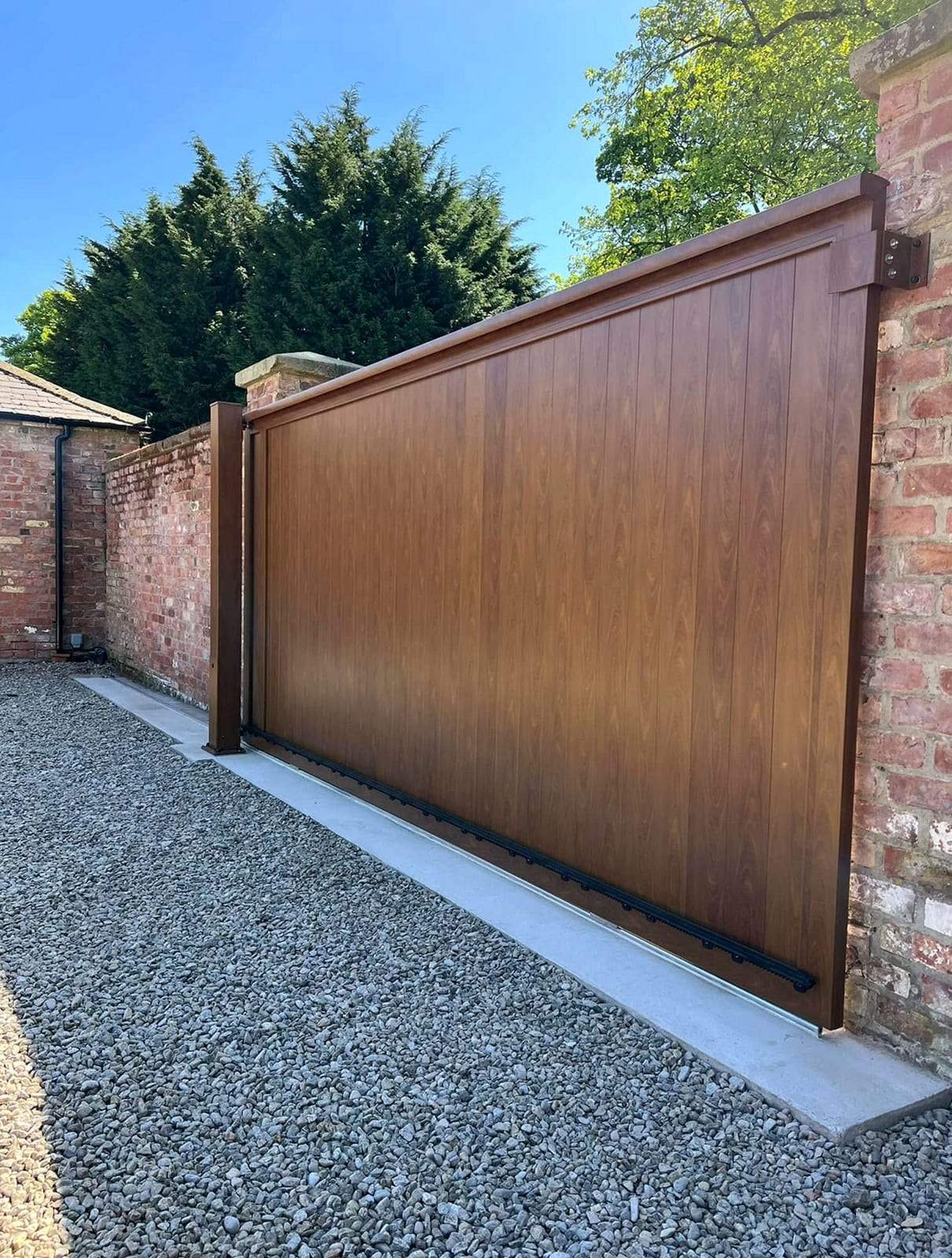
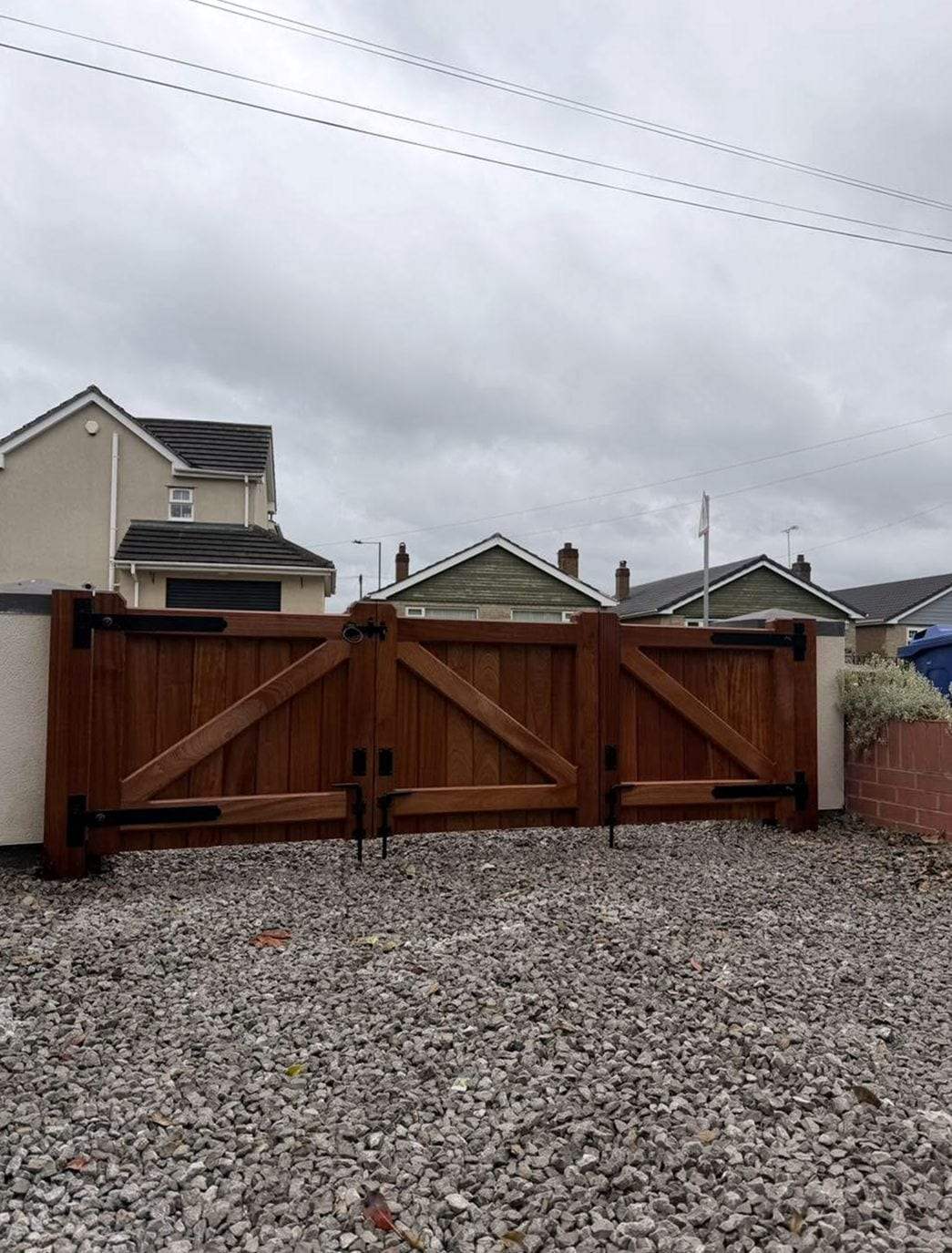
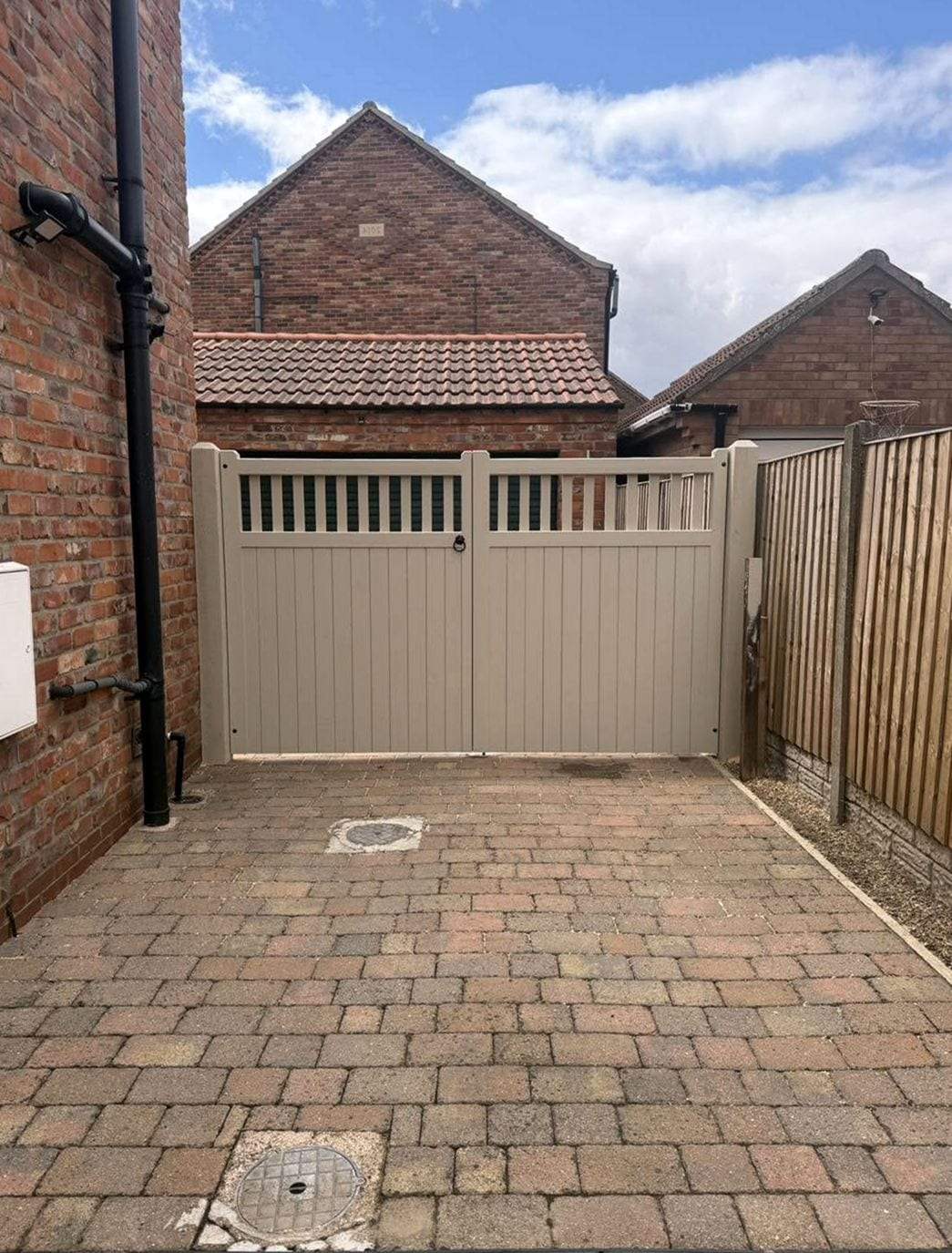
Lubrication, Winterizing and Snow
How often should gate hinges and rollers be lubricated?
For most home gates, twice a year: in the fall before the cold sets in, and in spring once the salt is washed off. Busy community and commercial gates need it more often. Use a lubricant made for outdoor, cold-weather use on hinges, pivots and rollers. Keep heavy grease off gear racks and chains unless the manufacturer says otherwise, because it holds grit that grinds the teeth.
How do I winterize an automatic gate opener?
Test the backup battery and replace it if it is weak, since cold cuts a battery’s capacity. Make sure the operator cover seals and its drain holes are clear, and that the wiring entries are tight so mice don’t move in. Clear and level the track, lubricate with a cold-rated product, and test the photo eyes and the reversing. A fall check from us covers all of this, plus the force and limit settings inside the operator.
How should I handle snow and ice around the gate track?
Clear it before the gate runs, not after it gets stuck. Shovel the track and the strip the gate rides on, and keep the swing path clear for the full width of each leaf. Skip rock salt directly on tracks, hinges and the operator pad; it corrodes steel and breaks down the concrete around it, so use sand for grip. If the gate is frozen in place, switch the operator off or to manual until the ice is gone.
Do aluminum and vinyl gates need maintenance too?
Less, but not none. Hinges, latches and posts wear on every gate. Aluminum needs road salt rinsed off now and then, and vinyl gates should be checked for sag, especially wide leaves in cold weather when the plastic is stiff.
Want us to handle the seasonal checks?
A fall visit covers lubrication, adjustment, the backup battery and every safety device before winter sets in.