
Our Process & Safety Standards
Whether it is one gate at a house or several at a complex, a project runs the same way: we listen, measure, put a clear price in writing, do the work, test it and walk you through it. No vague estimates and no surprise extras. That is how the business has worked since 2011.
Automatic gates add a second layer: safety. A gate can weigh hundreds of pounds and moves on its own, so the standards below are not optional extras. They are the difference between a gate that is safe around children, pets and cars and one that is an accident waiting to happen.
How a Project Runs
-
Consult
A phone call to hear what you need: a repair, a new gate, automation, access for tenants. Photos by email to office@marvinedoorsgates.com help us come prepared.
-
Site measure
Opening width and height, slope, posts and footings, soil, power, and how the gate is used and by whom. For repairs, this is where the diagnosis happens.
-
Quote
A written price for the agreed work, explained plainly: what the gate needs, what it costs and what can wait. If a repair isn’t worth making, you hear that here.
-
Install
Footings, posts, the gate, the operator and the wiring, done to the plan. If something unexpected turns up, such as rock in a post hole or a crumbling pillar, you hear about it before anything changes.
-
Test
Travel limits, force settings, reversing, photo eyes and edges, remotes and keypads, the manual release and the backup battery, each one checked.
-
Walkthrough
How everything works, how to open the gate by hand in a power outage and what to keep an eye on season by season.
Safety-Standards Checklist
UL 325 is the safety standard gate operators are tested and listed to; ASTM F2200 covers how automated vehicular gates themselves are built. On the automatic gates we install or repair, these are the points we check before calling the job done:
- UL 325 entrapment protection: monitored sensors for every spot where a person could be trapped, so the gate stops and reverses
- Photo-eye sensors across the opening, at the right height, aligned and tested
- Safety edges on leading edges and anywhere the gate closes against a post or wall
- Pinch-point guards at hinges, rollers and the gaps between the gate and its posts
- Roller guards and small openings on slide gates, so hands cannot reach through where the gate passes a post
- Manual release access: a release that works, that the owner can reach and knows how to use
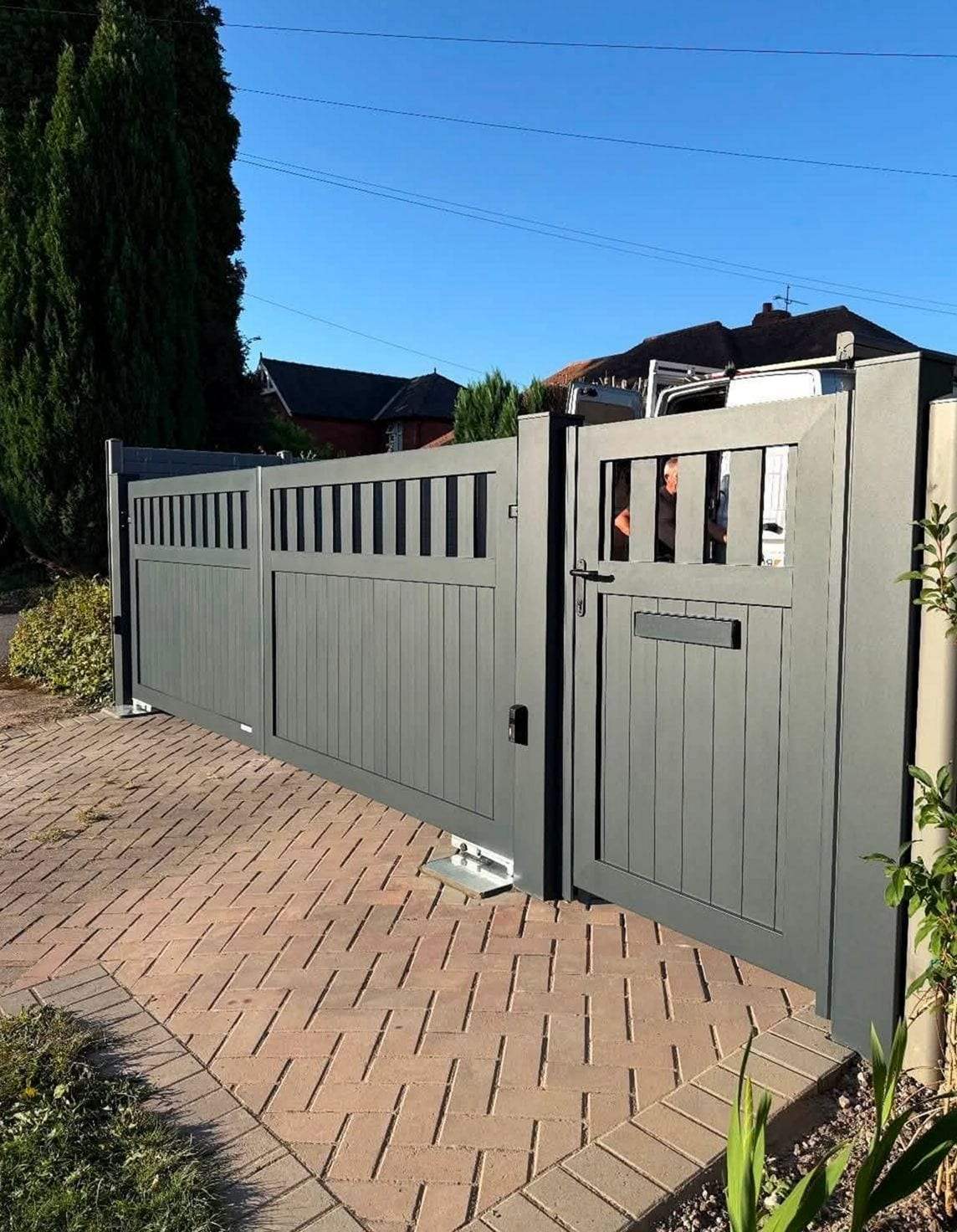
- A separate walk-through gate for people; the vehicle gate is for vehicles
- Controls out of reach, at least six feet from the moving gate, so nobody can work it while reaching through
- Warning signs on both sides of the gate
- Positive stops at the end of travel, so a slide gate cannot roll off its track
Never bypass a safety device
If a photo eye or an edge keeps stopping the gate, something is wrong with the sensor, the wiring or the gate. Jumping the sensor out makes the gate close on whatever is in its way. Call us instead: (610) 831-4073.
Warranty Coverage: Who Covers What
Warranty terms depend on the parts and the job, so we don’t print durations here. This table shows where coverage comes from and what to ask before you approve the work.
| Item | Part or labor | Duration | What it usually covers |
|---|---|---|---|
| Gate operator (motor and gearbox) | Part | Set by the manufacturer for each model. Ask for the term before you choose an operator. | Defects in the motor, gears and housing. Storm, impact and flood damage are usually excluded. |
| Control board, receiver and remotes | Part | The maker’s own term, often different from the operator’s. | Electronic failures. Lightning and power-surge damage are often excluded. |
| Safety devices (photo eyes, edges) | Part | Per device, from its manufacturer. | Sensors and edges that fail in normal use. |
| Gate, frame and finish | Part | Depends on the maker and the coating; finish terms can depend on salt exposure and care. | Defects in welds, frame and coating. |
| Installation work | Labor | Ask before you approve the job, and get the answer in writing. | Workmanship: how the gate was hung, footed, wired and set up. |
| Repair work | Labor | Agree it when you approve the repair, in writing with the estimate. | The repair that was made, not other worn parts on the same gate. |
Inspections and Code Compliance in Bethlehem
Does a new gate need an inspection?
If a new electrical circuit is run for the operator, the electrical work typically needs a permit and an inspection under the Pennsylvania Uniform Construction Code. Some municipalities also review fences and gates for height and placement before they go up. The permit office for your municipality, whether that is the City of Bethlehem or a surrounding township or borough, has the current rules.
Which codes apply to gates in Bethlehem?
Zoning sets height limits, front-yard rules and how close to the street or sidewalk a gate can stand, and corner lots often have sight-line rules so drivers can see around them. Building and electrical codes cover footings and wiring. In Bethlehem’s historic districts, changes visible from the street can also need design review. The rules differ between the city and each surrounding township, so check with the one your property is in.
Can a gate swing out over the sidewalk or the street?
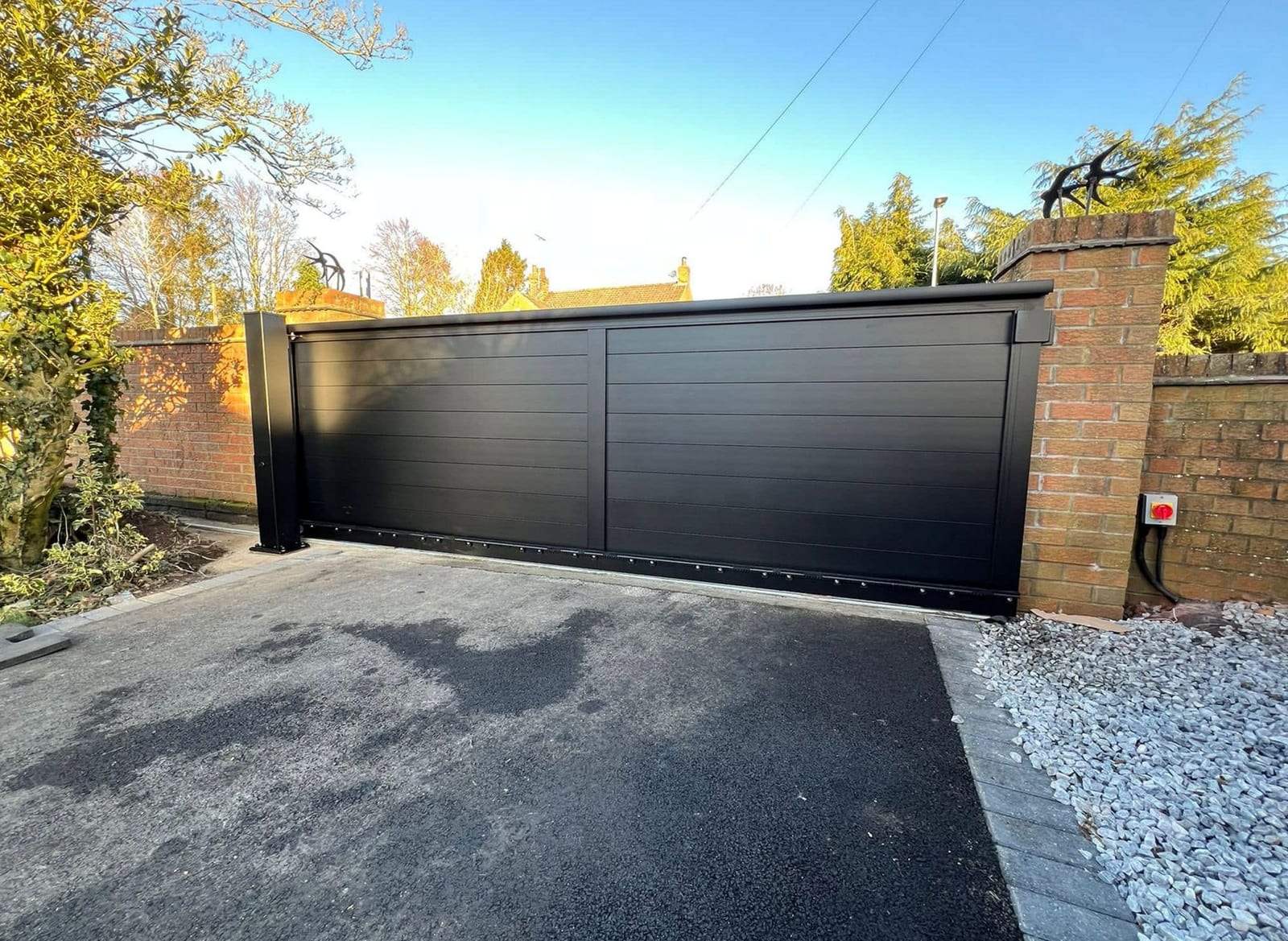
It shouldn’t. An automatic gate must not open into a public sidewalk or roadway, and local rules generally don’t allow it either. Where a short drive leaves no room for an inward swing, a slide gate is usually the answer.
Is my older automatic gate safe?
It may be missing protections that newer gates have. Since the 2016 edition of UL 325, operators need monitored entrapment protection, and many gates installed before then have weak or no sensors. When we service an older gate, we tell you what is missing and what it would take to bring it up to date.
Start with a conversation
Tell us about the gate or the opening. The first step is always the same: we listen and then we measure.